
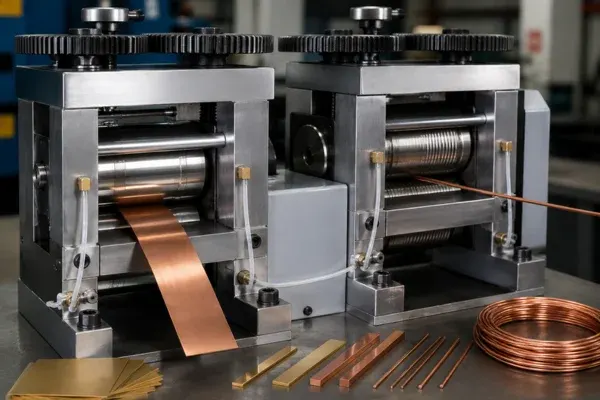
The Stage Where Precision Actually Shows
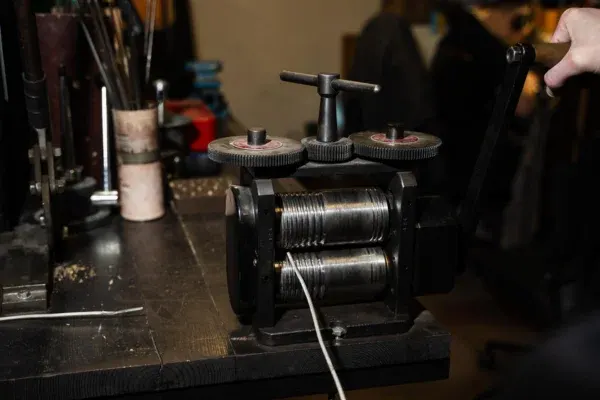
Rough rolling gets gold into a workable shape. Fine rolling is where that shape becomes something jewellery-ready — thin, even, and clean enough to move straight into stamping, design work, or further shaping without extra correction. This is the stage where small errors stop being forgivable, and it’s exactly what our gold fine rolling machine is built to get right.
By the time material reaches fine rolling, it’s already been through significant reduction. What’s needed now isn’t power — it’s control. Fine adjustments, tight tolerances, and a surface finish that doesn’t need rework before the next production step. That shift in priority is what separates a fine rolling machine from the heavier-duty equipment used earlier in the process.
Built for Tight Tolerances, Not Heavy Reduction
Where our rough rolling machine is designed around raw pressure and durability, this machine is built around sensitivity. The gap control allows for small, precise adjustments, letting operators dial in exact final thickness without the guesswork that comes from equipment meant for bigger reduction jobs. Even a fraction of a millimeter matters at this stage, since it’s often the last rolling step before the material moves into stamping, engraving, or wire drawing.
The rollers themselves are finished to a higher standard than what’s needed earlier in the process, since any surface imperfection at this stage shows up directly in the finished material rather than getting smoothed out in a later pass.
Consistent Final Output, Batch After Batch
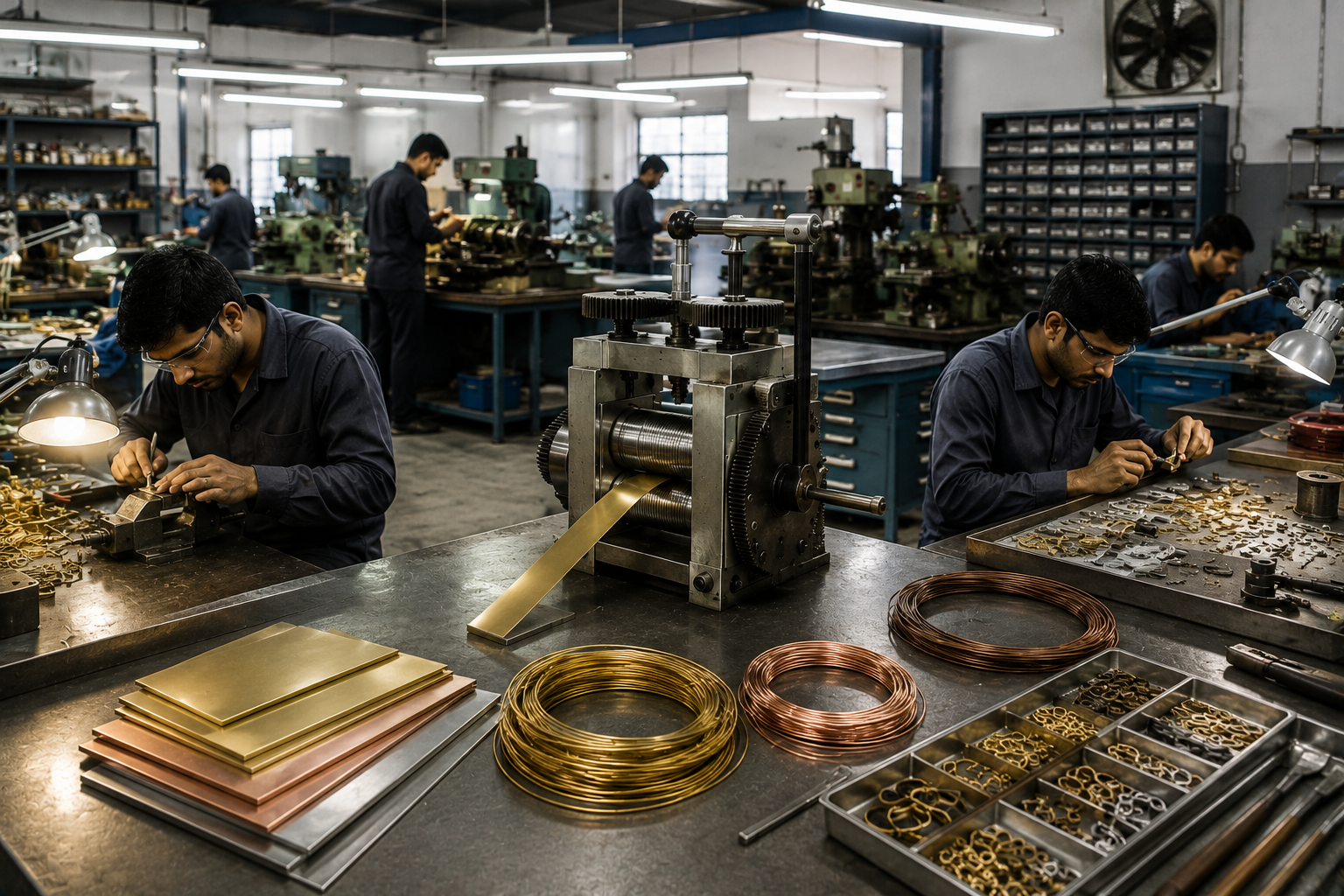
Manufacturers depend heavily on fine rolling consistency because this is usually the last checkpoint before material becomes actual product. If thickness varies from batch to batch at this stage, it ripples through everything downstream — inconsistent stamping results,
uneven engraving depth, or wire that doesn’t draw predictably. Our machine’s hardened rollers and stable frame are built to hold calibration tightly, so batch fifty looks and measures the same as batch one.
Reduces Rework and Wasted Material
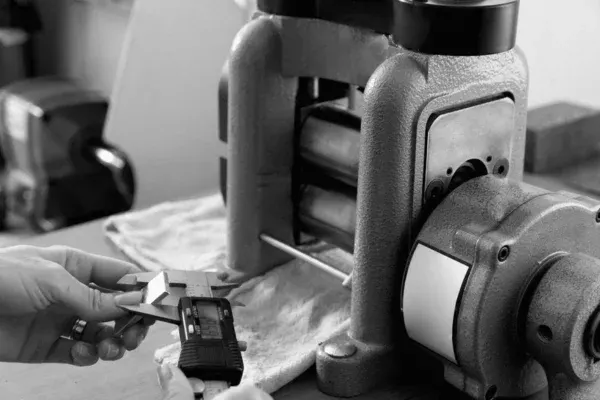
Because fine rolling is close to the end of the material’s journey, mistakes here are expensive — there’s less room to correct an error without scrapping material or reworking an entire batch. A machine that holds tight tolerances at this stage directly reduces how much gold ends up wasted or reprocessed, which matters a great deal given how costly raw material losses are in this industry.
Works Alongside Your Existing Production Line
This machine is designed to slot naturally into a production line that already includes rough rolling or initial reduction equipment, picking up exactly where that stage leaves off. It doesn’t duplicate what rough rolling does — it refines what rough rolling produces into something ready for actual jewellery-making processes.
ISO 9001:2015 Certified Manufacturing
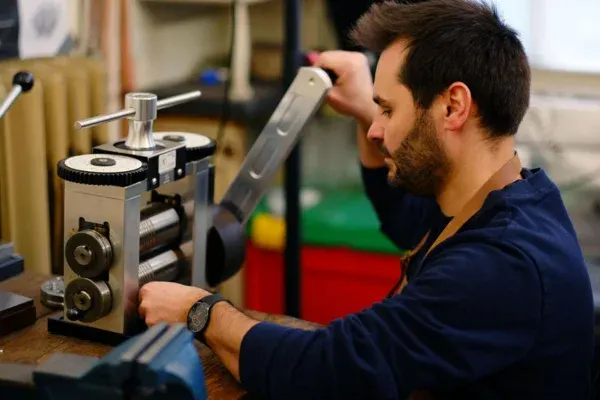
Every fine rolling machine we manufacture goes through structured quality checks under our ISO 9001:2015 certification, with particular attention to roller finish quality and gap-control accuracy before it leaves our Ahmedabad facility.
Who This Machine Suits
This machine is built for manufacturers who need precise, final-stage thickness control before material moves into stamping, engraving, or further jewellery-making processes. If your production line already handles rough reduction and needs a dedicated finishing stage, this machine fills that role directly.
Reach out to our team to discuss your final thickness requirements and production volume.
FAQS:
What's the difference between rough rolling and fine rolling?
Rough rolling handles the initial, heavy reduction of raw gold ingots, while fine rolling focuses on precise final-stage thickness control and surface finish before the material moves to further processing.
Why does surface finish matter more at the fine rolling stage?
Since fine rolling is usually the last rolling step before stamping, engraving, or drawing, any surface imperfection at this stage shows up directly in the finished product rather than being corrected later.
Does this machine reduce material wastage?
Yes, tight tolerance control at the fine rolling stage minimizes the risk of thickness inconsistencies that would otherwise lead to reworked or scrapped batches.
Can this machine be used alongside a rough rolling machine?
Yes, it’s designed to complement rough rolling equipment, picking up the material after initial reduction and refining it to jewellery-ready specifications.