
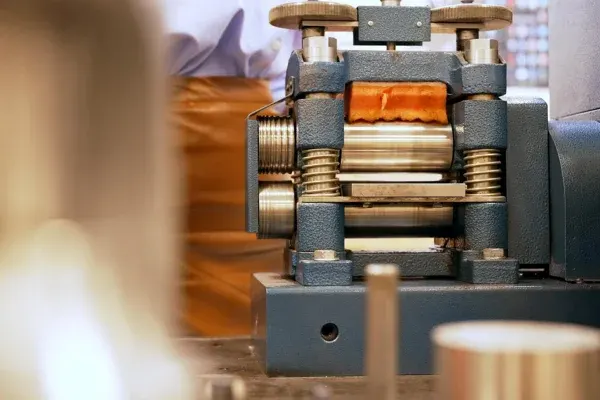
Silver Deserves Its Own Calibration, Not Gold's Leftovers
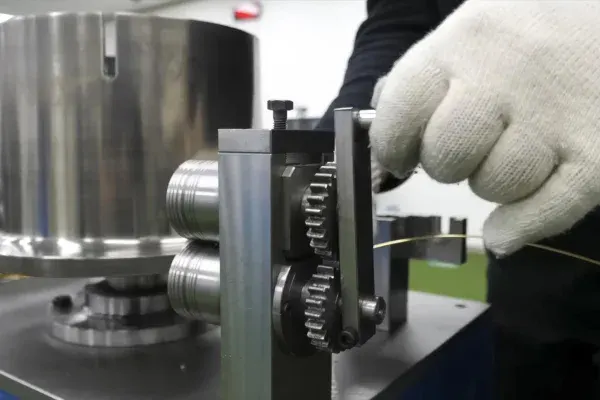
It’s tempting to assume a machine built for gold tar patti will handle silver just as well, since the format looks identical on the surface. In practice, silver behaves differently enough under the rollers that treating it as an afterthought produces inconsistent results. It work-hardens faster than gold and responds differently to pressure, which means a machine calibrated purely around gold’s properties often struggles to hold the same precision once silver is loaded. Our silver tar patti rolling machine was built specifically around silver’s behavior, not adapted from a gold-first design.
This distinction matters more than it might seem. Manufacturers who’ve tried running silver through gold-calibrated equipment often end up with flat wire that’s inconsistent in thickness or prone to surface cracking, especially over longer production runs.
Built Around Silver's Specific Properties
Silver’s faster work-hardening rate means pressure and pass sequencing need to be handled differently than with gold to avoid brittleness or cracking in the finished strip. Our machine’s roller pressure and gap settings are tuned specifically for silver, giving operators the ability to produce flat, ribbon-style wire without fighting the material’s tendency to stiffen mid-process.
The result is silver tar patti that holds a consistent width and thickness profile suited to traditional jewellery applications, without the surface defects that come from equipment not properly calibrated for this metal.
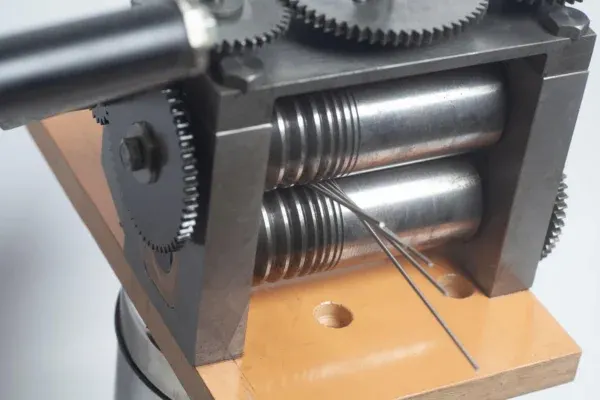
Serving Silver-Specific Jewellery Categories
Silver tar patti finds its place in a distinct set of traditional jewellery categories — payal and anklets, silver temple jewellery, oxidized jewellery borders, and various regional silver ornament styles that remain in strong, steady demand across Indian domestic markets. These categories often call for a slightly different dimensional profile than their gold counterparts, and our machine is calibrated to meet those specific expectations.
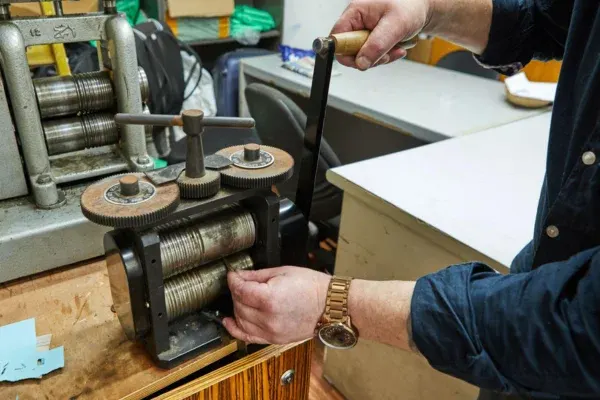
Consistency That Supports Artisan Work
Much like gold tar patti, silver tar patti frequently moves into detailed artisan work after rolling — oxidizing, engraving, or setting into larger pieces. Karigars working with inconsistent strip lose time correcting material issues instead of focusing on the actual craftsmanship. Our machine produces silver tar patti with steady dimensions across its length, so the material supports the artisan’s work rather than slowing it down.
Handling Silver's Tendency to Tarnish During Processing
Silver’s surface is more reactive than gold’s, and excessive heat or friction during rolling can accelerate tarnishing or discoloration before the material even reaches the artisan. Our machine’s roller finish and speed control are set up to minimize unnecessary surface stress, helping preserve silver’s natural finish through the rolling stage.
Reliable Across Extended Production Runs
Whether you’re producing a short batch or a long continuous run for a large order, this machine’s hardened components hold calibration steadily, so silver tar patti quality doesn’t drift from the beginning of a run to the end.
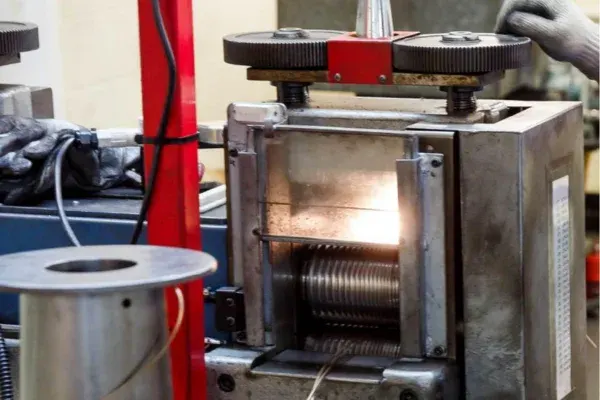
ISO 9001:2015 Certified Manufacturing
Every silver tar patti rolling machine we build is tested under our ISO 9001:2015 certified process, with specific verification for silver-appropriate calibration and surface finish before it leaves our Ahmedabad facility.
Who This Machine Suits
This machine is built for manufacturers producing silver-specific traditional jewellery formats — payal, anklets, temple jewellery, oxidized designs, and decorative borders. If silver tar patti is a regular part of your production line, this machine is calibrated around exactly that requirement.
Reach out to our team to discuss your silver tar patti width and thickness specifications.
FAQS:
Why can't a gold tar patti machine be used for silver as well?
Silver work-hardens faster than gold and responds differently to roller pressure, so equipment calibrated purely for gold often produces inconsistent results or surface cracking when used for silver.
What jewellery categories commonly use silver tar patti?
Silver tar patti is widely used in payal and anklets, silver temple jewellery, oxidized jewellery, and various traditional regional ornament styles.
Does this machine help prevent tarnishing during processing?
Yes, the roller finish and speed control are set up to minimize unnecessary surface stress and heat, helping preserve silver’s natural finish through the rolling stage.
Is this machine suitable for high-volume silver production?
Yes, its hardened components maintain calibration consistently across both short batches and longer, continuous production runs.